Art Is Not an Extra: The Importance of Art in Early Development
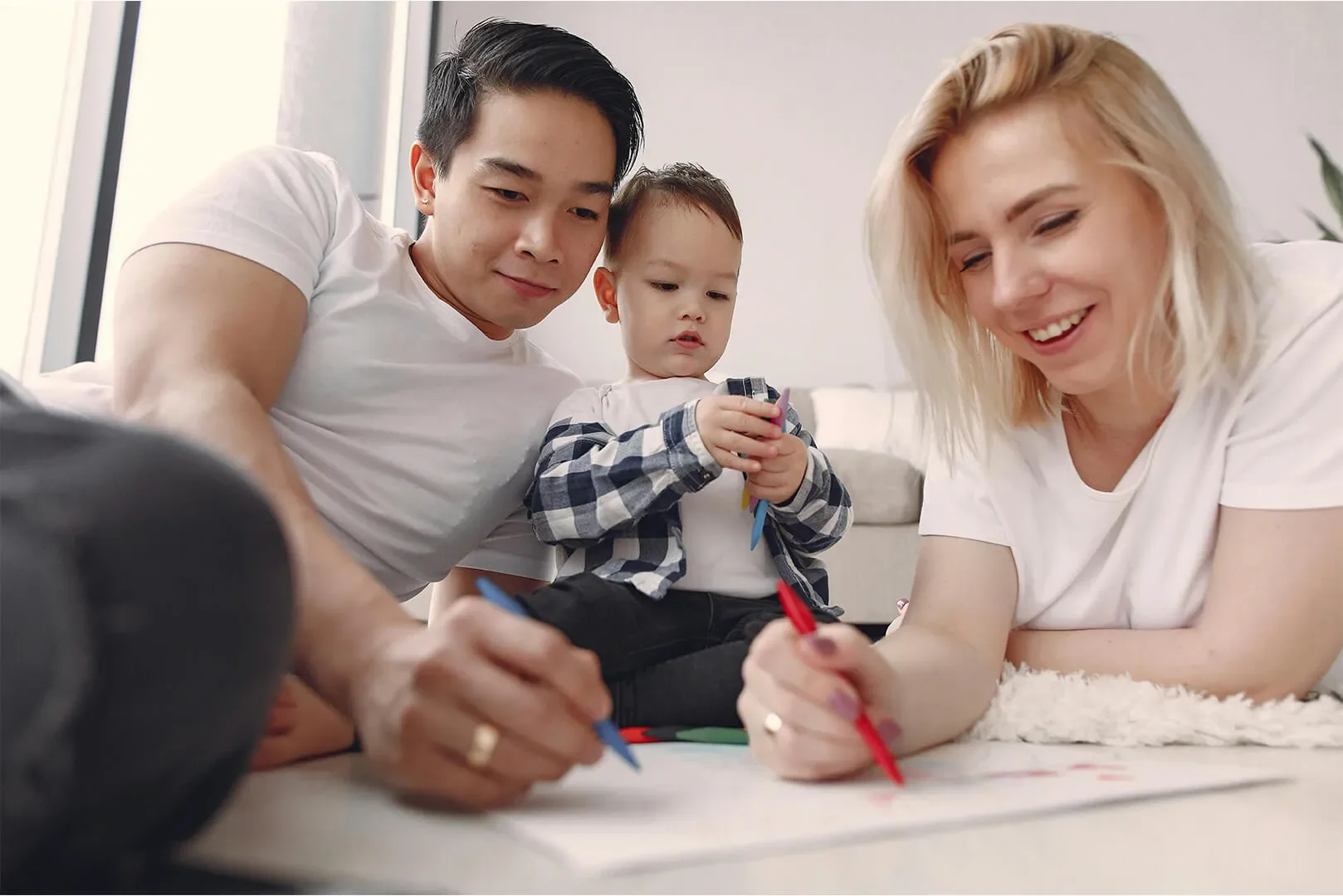
Somewhere along the way, a lot of us absorbed the idea that art is a “nice to have.” The fun station. The Friday activity. The thing you do after the “real work” is done.
But in early childhood, art is not the extra. It is part of the real work.
When kids paint, cut, build, glue, scribble, sculpt, sing, act out stories, and invent characters, they are practicing the exact set of skills early development depends on: attention, communication, emotional processing, planning, persistence, coordination, and social connection.
In this post, when I say “arts learning,” I am not talking about formal training or perfect technique. I mean hands-on making. Creative projects that are open-ended, doable, and age-appropriate.
Art Builds The “Whole Brain” Skills Kids Use Everywhere
Early childhood development is not just about learning letters and numbers. It is about building the internal systems that make learning possible in the first place.
The American Academy of Pediatrics puts it plainly: play supports brain structure and functioning, helps connect synapses, and supports brain plasticity. Creativity based play, including artmaking, lives inside that same developmental lane.
Art invites kids to practice executive function without calling it that.
Planning: “What do I need first?”
Working memory: “What was the next step again?”
Cognitive flexibility: “This ripped. What else can I do?”
Self-regulation: “I am frustrated, but I can keep going.”
You can watch these skills develop in real time when a child sticks with a project, improvises around a mistake, or revises their plan halfway through because their original idea changed.
Art Strengthens Language Without Feeling Like “Language Practice”
A lot of early language growth happens when kids are trying to explain what they are doing.
Art naturally prompts conversation:
naming colors, shapes, textures
describing a plan
telling a story about what they made
asking for help, or offering help
That back-and-forth matters. The AAP notes that play supports language development through listening, observing cues, and building vocabulary through interaction. Art projects are one of the easiest ways to create those interactions without forcing them.
Art Supports Social and Emotional Development, Especially When It Is Shared
Art gives kids a way to process feelings without needing perfect words.
Sometimes the “product” is not the point at all. The point is:
learning to try something new in front of others
handling feedback
collaborating
negotiating materials and space
taking turns leading and following
Large scale research from the National Endowment for the Arts (NEA) has found positive relationships between early childhood arts engagement and a range of social-emotional attributes and cognitive outcomes. In their 2025 report, the NEA summarizes findings across major longitudinal datasets and highlights that at-home arts engagement for toddlers, preschoolers, and kindergarteners was positively correlated with social-emotional and cognitive outcomes.
Important note: correlation is not the same as causation. Kids who have access to arts experiences often have other supportive factors too. The point is still meaningful, though. Arts engagement reliably shows up alongside markers of healthy development, and that is exactly why access matters.
Art Helps Kids Build Persistence and Tolerance for “Not Perfect”
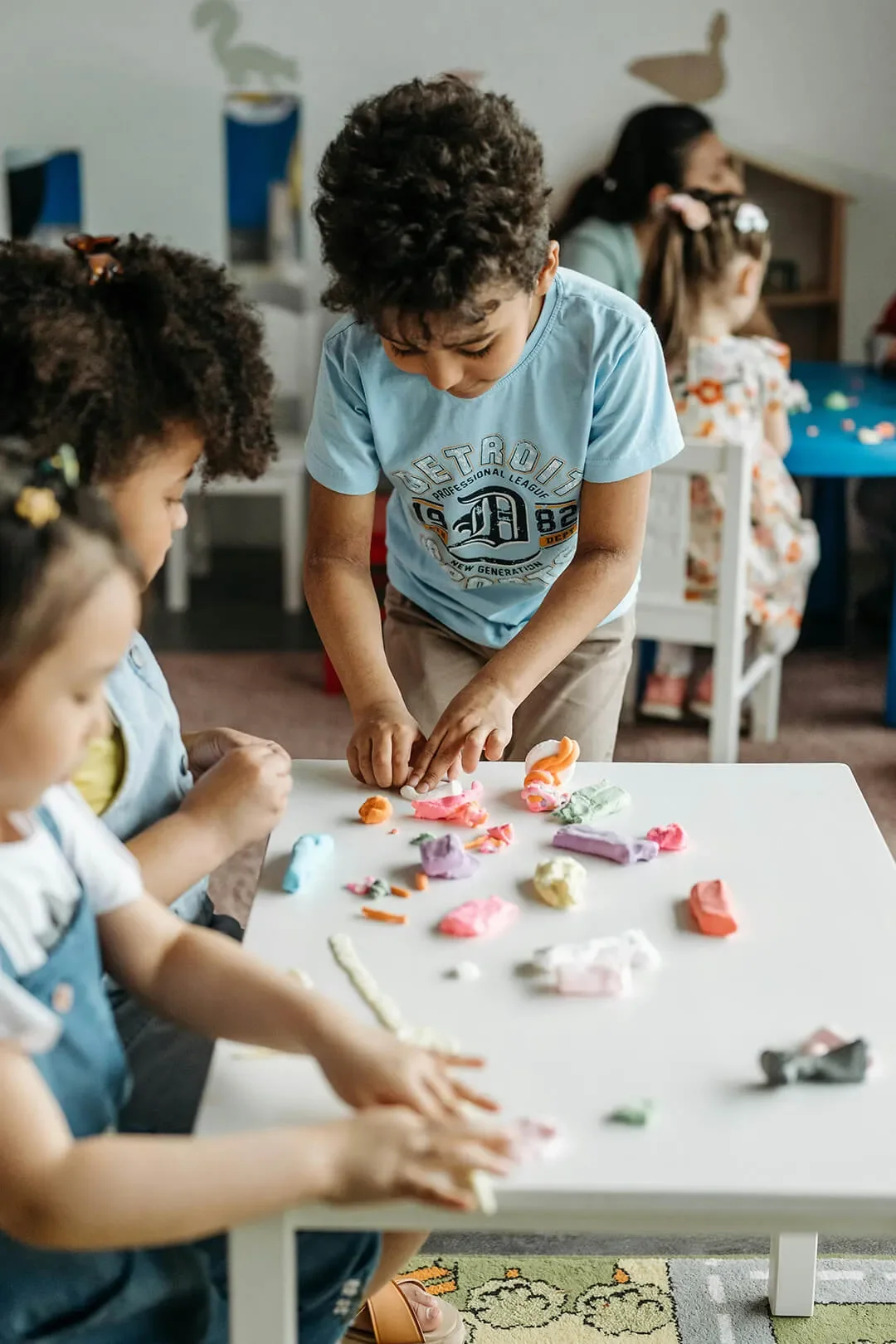
Early development is full of tiny setbacks. The glue is too runny. The marker bled. The paper tore. The tower fell.
Art is one of the safest places to practice what to do next.
That “what to do next” muscle becomes:
sticking with a challenge
problem-solving
experimenting
trying again without shame
This is one reason project design matters. When projects are too rigid or advanced, kids learn “I cannot.” When projects are structured but flexible, kids learn “I can figure this out.”
Art Is A Community Skill
Art does not only live in individual development. It lives in relationship, culture, and belonging.
UNESCO describes culture and arts education as supporting socio-emotional skills and links arts participation with empathy, perspective-taking, and respectful behavior toward diversity.
This matters because kids do not develop in isolation. They develop inside families, classrooms, libraries, neighborhoods, and community spaces. When creative opportunities are visible and normal, kids get a steady message: you are allowed to make things here.
What This Means in Real Life
If you are a parent, caregiver, educator, or community partner, here is the encouraging part.
You do not need a fancy setup. You do not need rare materials. You do not need “artist skills.”
You need consistency, clarity, and a project that feels doable.
Here are a few research-aligned principles that make art more effective for early development:
1) Keep projects structured, but not rigid.
Clear steps reduce overwhelm. Flexible outcomes keep it personal.
2) Use simple materials on purpose.
A limited supply list helps kids focus on choices, not options.
3) Build in a “choice moment.”
Pick the colors. Choose the background. Add a detail. Choice is agency.
4) Make room for process.
Ask about the how, not just the what: “What part was tricky?” “What did you change?”
5) Repeat formats so kids get fluent.
When kids recognize the structure, they take bigger creative risks inside it.
Why This Matters to Palette of Possibilities
We take this seriously because this is the kind of learning that hides inside creative work. Planning, revising, sticking with a challenge, and communicating an idea. These skills show up in school, relationships, and everyday problem-solving, long after the paint dries.
Art is not the break from learning. For kids, it is one of the ways learning actually happens.